Tool demo · Replenishment
Reorder Planner
Blend 30- and 90-day velocity into reorder points and a ranked buy plan, sized by the revenue a stockout would actually cost you.
The problem
Buying was the whole business, and the buy was decided from memory and a stock report. A stockout left no trace except a flat line where a winner used to be, while one hot week could size the next order for a style that was already cooling. Generic replenishment apps worked in units and did not know which styles were declining or what a stockout actually cost.
The tool
- Rolls each style up from its sizes with live 30-day and 90-day sell-through
- Blends the two velocities into a reorder point, so one hot week does not size the buy and one slow month does not starve a steady seller
- Suggests a buy quantity from the target-stock rule and a days-of-supply low trigger
- Ranks the plan by the revenue a stockout would cost, so a limited budget goes to the right styles first
- Holds declining styles and thin-margin sizes off the purchase order even when the raw math says buy
About the data below: this demo is branded West Coast Deals because that's the store it was built for, but every figure in it is invented, a fixed sample catalog, not live or historical trading data. The logic is the real thing; the numbers are not.
Inventory
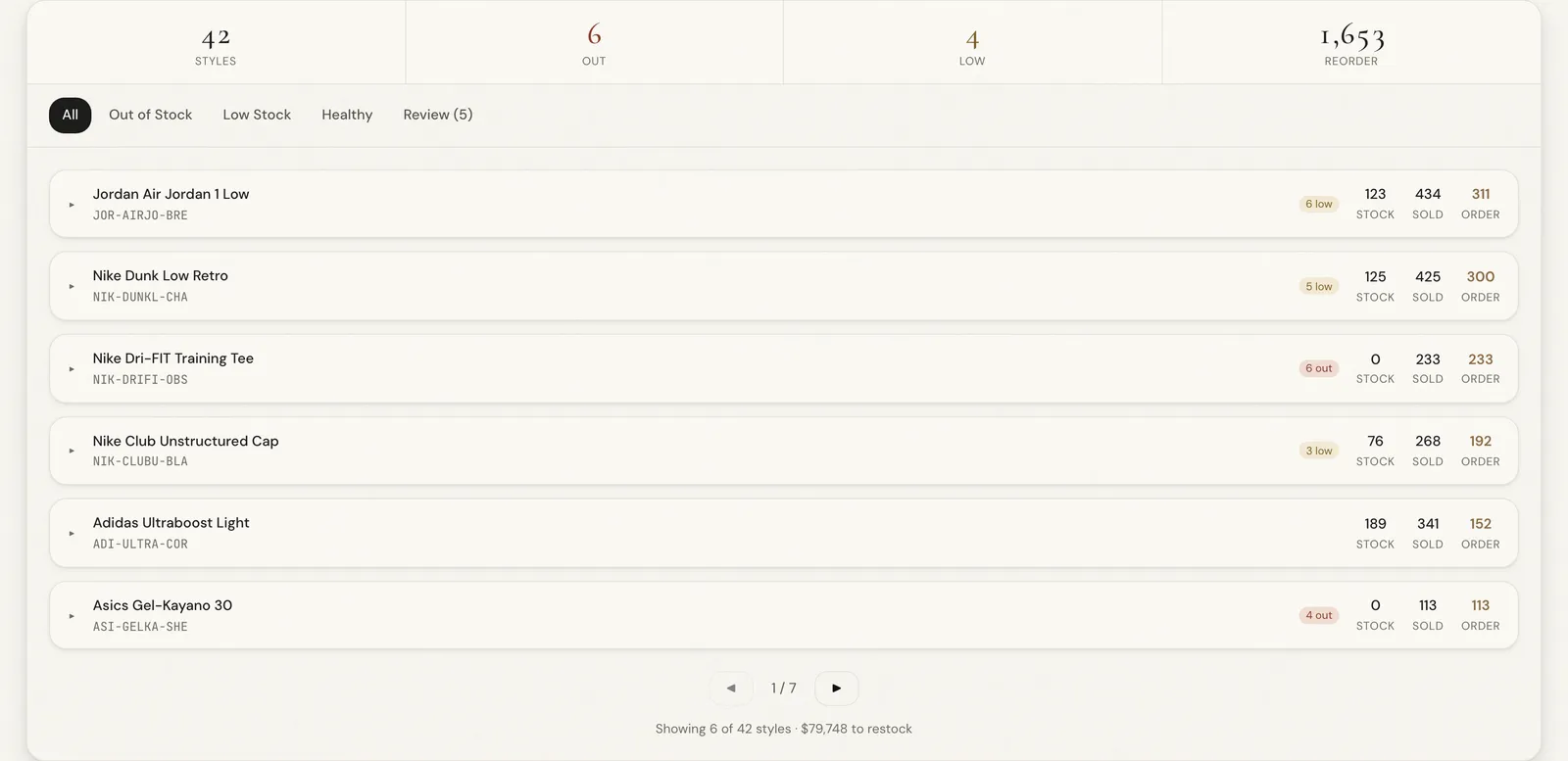
West Coast DealsSample dataShowing 6 of 42 styles · $79,748 to restock
How it works
A watchlist, rolled up by style
You reorder the styles you carry on purpose, so the planner works from a watchlist and groups each style's sizes into one card: total stock, 30-day units sold, and the suggested buy. Expand the card and the sizes show which to order, each with its own stock, sell-through, average selling price, and status. Sort the board worst-first, or flip to the priority view to see the top sellers ranked by units sold. It is the twenty decisions that move the week, the short list a sharp buyer keeps in their head, made explicit and re-costed every time the data refreshes.
Target stock
The buy math is simple, because simple is what gets used every week. Take a size's 30-day sales, multiply by a target-cover multiplier, and that is the target stock. The gap between the target and what is on hand is the quantity to order, floored at zero. A days-of-supply threshold flags anything that will run Low before the normal reorder, and anything at zero as Out. Turn the multiplier and the threshold in the demo above and the whole plan re-costs.
One gate keeps the plan honest: the minimum margin. If a size's realized price minus its cost falls under the floor, it is flagged Low $ and dropped from every buy total, because restocking a size you barely make money on is how a catalog bloats.
Where a style sells
Units sold is half the picture. Where they sold decides what you kept. Tap a style's sales and the channel breakdown splits its units across every marketplace with the real take rate applied, so gross sits next to true payout. A size that looks like a strong reorder on volume can look different once most of it turns out to move on the channel that keeps the least. Replenishment and channel economics are the same decision.
Stop reordering the dead
The other side of buying winners is leaving the dead stock off the order. The Review queue surfaces every style with no stock and no sales, so a weekly buy also becomes a weekly prune. Overstock and stockout are the same problem measured from opposite ends, and a planner that shows both turns the weekly buy into a ranked, costed list.
The result
Days in stock fell because the buy got better at both ends: no overstocking on the sellers, and no replenishing styles that sold but not at proper margin. The planner also shows where each item is selling and for how much, which is the insight the buy was missing.
license
License Reorder Planner for $99 a month, with a $300 setup.
The weekly buy plan from your sales, with the margin gate and the review queue.
- A one-time setup fee where one is listed, then month to month with 30 days notice.
- Setup covers connecting your accounts, loading your data, and the first two weeks. The monthly license starts when the tool is live.
- A change to the logic is a custom build, quoted after the free consultation.
Want this for your business?
The examples are retail because that is where I built them. The same build applies to scheduling, job costing, or field reporting. The consultation is free, and the price is fixed before the build starts.